The Call Back Home | Why Modern Women Are Craving a Simpler Life
Maggie (00:02.328)
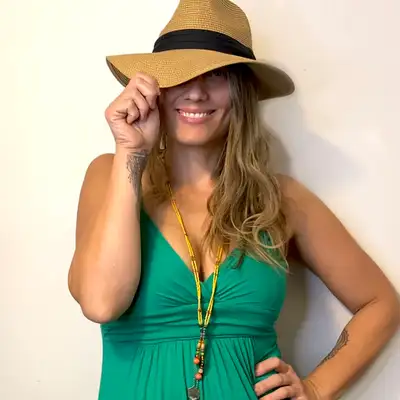
What if your desire for a garden, a slower pace, homemade breads, ermal remedies, and a house filled with life isn't a trend at all? What if it's an echo? Welcome to Women Folk Revival, where we are deeply rooted and wildly intentional. I'm Maggie.
Meara (00:25.199)
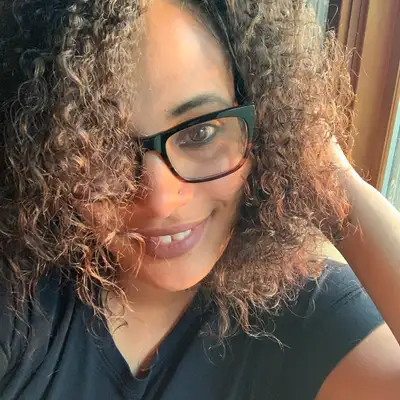
And I'm Mira. Today we're talking about
ancestry, not just where our families have come from, but how they lived, the skills they had, and the things that they valued. And whether some of those old ways might still be calling us today. Because the more Maggie and I started digging into our ancestry, the more we realized that this wasn't really about the names and the dates or our family trees, but it was about trying to understand the people who came before us. And for me it ended up becoming a lot more personal
Maggie (01:02.362)
Mine, you know, I I never did one of the ancestry kits, but both of my parents did. So with some research and with some help from AI, yes, I do occasionally use AI. I was able to figure out what in general, you know, kind of makes me up.
Meara (01:15.969)
Mm-hmm.
Meara (01:29.105)
Yeah.
Maggie (01:29.836)
And my parents, it's very odd. My parents both had exactly forty six percent Northwestern Germany or ancient Germanic. Some some kind of both had forty six percent. Isn't that nuts?
Meara (01:39.796)
well.
Meara (01:44.645)
That's crazy. That's crazy.
Maggie (01:47.136)
So that is mostly what I am.
Meara (01:51.569)
And you have your parents too, you know, kinda lean on their lineage with the twenty three and me, but you also have them that can tell you
you know, firsthand what it was like for them growing up and maybe your grandparents growing up. But for me, I was adopted at six months. I had an amazing family. I was very well taken care of. But for most of my life I always thought that if I ever reached out to my biological family, I would want to do it for medical history because if I were to ever have kids, and I wanted to thank my biological mother. because that was like the most selfless thing that anybody could ever do is giving up a child.
But about three years ago, when you and I reconnected, I wanted to kind of start digging deeper into my ancestry because we these were some of the things that we were starting to get into. And I wanted to find what that missing piece was.
Me getting emotional. Home. Where I came from. You know,
I don't know why I'm always so emotional. But it's like it's like the missing piece I found, you know? It was a part of my identity that I didn't even realize that I had been carrying around unanswered because growing up it really didn't matter to me. I I was so loved that I really just didn't care. So when we started digging into our ancestry, I really didn't know what to expect. I am like the most unique person, I think, because I found out that on my mom's side, it's mostly Austrian, South German, and Slovenian. And on my dad's
Maggie (03:11.79)
Mm.
Meara (03:26.661)
it's mostly Nigerian and West Africa, which was fascinating to me because it's like Ghana and Congolese, I think I'm saying that right, were some of the other parts of Africa. So for the first time I had felt like I had actually had a piece of my identity that I that I could connect to, you know, the actual places and the history that had existed you know, before me. And that made me really curious.
Maggie (03:51.256)
And I do feel, you know, I know here in America it's it's always such a big deal for people to be like, well I'm I'm German, I'm Irish and you know and that doesn't really that doesn't really affect me at all. And I don't know if you feel like it affects you now knowing. But I do it is neat to listen to the calling that I have inside of me.
Meara (04:01.093)
Yeah.
Meara (04:07.205)
Mm-hmm.
Meara (04:20.571)
Mm-hmm.
Maggie (04:20.607)
And how it reflects how people from that part of the wor the world, you know, two, three hundred years ago lived. And that to me is is totally fascinating.
Meara (04:31.099)
Mm-hmm.
Meara (04:36.077)
It it really called out to me because like I said, growing up, you know, my mom named me Mira, which is Irish Gaelic and she's Irish and I'm not Irish, so I just kind of always didn't really have much to go on. And then I would always like support my husband, the Pakistani flag, the Bahraini flag and you know, I would always hang these up in my garage and he's like, But you're not you're not Pakistani. I want my Pakistani flag. Can I have it? And it made me almost feel kinda hurt in a way, like I still didn't belong. And this was just last year. But
since I dug deeper into this, I'm like, I finally have that, you know, that belonging where people, I guess most people feel when they're not adopted that they have that already have that connection with their family. So they don't have that yearning to like be a part of anything because they're already a part of something that they had come from. But I didn't have that. And now I have my own kids. So I I see that connection they have with the Pakistani side with their their father, but I just I don't feel like I had anything to offer them. But I also but that's because I had that missing piece
piece for me. So when I found that out, I really just took a hold of that and you know, I'm like clinging to it now. Not because I'm Nigerian or Slovenian, but because I understand like you just said now
How these people lived. On my mom's side, my biological mom's side, I kept reading about mountain villages, farming communities, people living by the seasons, like we're doing, preserving food, foraging, and preparing for winters. You know, they couldn't just run to the store and get something. They had to know how to provide it for themselves and they had to pay attention to the land. So as I was reading about that, I kept thinking, this exactly this is exactly what I've been drawn to and what we
Maggie (06:00.546)
Mm-hmm.
Maggie (06:06.133)
I'm that.
Maggie (06:12.908)
Yeah.
Meara (06:18.803)
we are drawn to, learning how to grow foods, herbs, animals and wanting how to do things for ourselves instead of depending on a system for everything.
Maggie (06:28.509)
Mm-hmm. And what I, you know, each each different area, and if you want to say tribe of people or group of people, you know, they all had certain things that that made them unique. But in a general sense, it all it it's all it's all the same, you know, and it's living with the seasons.
Meara (06:46.779)
Uh-huh.
Meara (06:54.671)
Mm-hmm.
Maggie (06:56.575)
It's knowing the land and living with the land. And you know, and that is just the most basic the most basic thing, you know. And it all stems back to our, you know, this feeling resonating in us that we want to live in our creator's world and and be a part of it like he intended. And that's what people have been doing for
Meara (07:08.261)
Basic thing we could be doing. Mm-hmm. Mm-hmm.
Meara (07:20.729)
Mm.
Meara (07:24.185)
Right. Centuries, yeah. Yeah. I I I agree a hundred percent that that's how it should be. I was also reading my father's side and what stood out to me about that, like you had just mentioned, is also is the community. people carried the knowledge, the elders, the aunts, the grandmas, you know, and it wasn't just a community like it is today where
Maggie (07:26.049)
Forever until Yeah.
Meara (07:52.803)
Okay, I'm a mom and of course I have a family, but I'm raising my family by myself and while my mom is there and while you know I have some friends there, minus you because you're always you're my you're my community. You're my you know my sister. But there's no village.
Maggie (08:04.109)
Okay, cool.
Meara (08:10.607)
And the thing that fascinated me about that Nigerian culture and that afr West African culture was the community that they had. You weren't raising your child alone. That child did not belong to you. It belonged to their grandmother. It belonged to the elders in the community. It belonged to the aunts. It belonged to everybody. And that's how that was passed down. And that's how you learn from the people around, you know. You just not family just not being a mom and dad and the kids trying to survive on their own like we are today. And there was layers of community there. And
I think that we're honestly all craving that right now. We always talk about building that village. Yeah.
Maggie (08:44.045)
Absolutely. Mm-hmm. Cause even you know, and even if you do live by, you know, modern standards and the way, you know, society is moving, it's still completely overwhelming to be a parent. And to not have that village is is just detrimental to to women especially. I mean it impacts it impacts everybody and the kids, but
Meara (08:58.469)
It is.
Meara (09:07.255)
Mm-hmm. And the expectations that it impacts.
Maggie (09:12.949)
You know, women are always gonna be the ones who carry the full weight of that.
Meara (09:17.679)
Mhm. Mhm. What is that called? The matriarch of the family is what we call grandmothers. so I'm not sure if that's like a thing, but
Maggie (09:24.929)
You know it's it's interesting in saying that and I'm I'm a little, I guess I'm just gonna say it. It it almost feels like a total attack on on women to to break apart the village and to create this modern societal way of
Meara (09:39.899)
See
Maggie (09:51.85)
living. You know, here women think they're that they're getting more opportunities and it's it's it's great we have more freedom and do we? Because I I didn't feel free in society and I didn't feel safe and I didn't feel like I was doing, you know, the best that I could do and doing what I was meant to do. I
Meara (09:53.158)
Mm-hmm.
Maggie (10:17.067)
You know, in my home with the protection of my husband and, you know, him going out and, you know, being the breadwinner and me raising my children at home and creating this this beautiful life that we're they're trying to create here and, you know, being a part of the land and really immersing myself in all of that. That is where I shine and that is where I feel
Meara (10:34.971)
Mm-hmm.
Maggie (10:43.605)
Like I can really truly do everything that I was meant to do and I am free. I am totally free.
Meara (10:49.627)
Meant to do. Yeah. Yeah. Now I feel like some of these women who might be listening in might think, but that's kind of like a reckless way of living. Don't you want to be around everyone in society? And and I think from what I f that's what I'm getting at. Yes, that's exactly what I'm getting at. There's just so few people out there any anymore now.
Maggie (11:06.934)
I would love to have a village just of like many people.
Meara (11:17.829)
Who can relate. And even if they don't relate, like I'm not on the same level as you. Somebody else is not on the same level as me. We all are at different levels, but we all have that relatability. And we all have that same thought process of how to live. And so you don't have to be in a clique to be, you know, a part of the a part of the community. That's not what it is. It's just all about
Living off of the land, how the creator had intended, you know, so on and so forth. But how does that one person find that community? Well, first and foremost, here for sure. But it was hard before we ever reconnected. I let go of a lot of friends, not in a sense of I didn't want to talk to them anymore, but but I got a lot of rid of a lot of
friends with hanging out with him and stuff because it just wasn't the way that I was living.
Maggie (12:15.5)
Yeah, I you know, I I I can use somewhere ill. I are wrong huh? Am I still frozen?
Meara (12:15.823)
So you were frozen for a second.
Meara (12:24.017)
Keep talking.
Meara (12:29.349)
I said keep talking. Yep, keep talking. you're back. Hi.
Maggie (12:30.869)
okay.
yeah, I for a long time I really strive to have friends because that's you know, that's what you do. And it just wasn't fulfilling to me. It wasn't you know, these were not real connections and you know, I decided that being alone would be better and so, you know, I I I did the whole lone wolf thing for a long time.
Meara (12:52.101)
Mm-hmm.
Meara (12:58.885)
Mm-hmm.
Maggie (13:03.866)
And, you know, then I had my husband and he was my best friend and he was, you know, he was who I had. And I also had my parents. I you know, I would consider my parents at this age, you know, friends of mine. even though they're still my parents, you know. but I I just didn't have any female friends because I did not there were not women that I knew that felt the way I did and understood
Meara (13:19.769)
Mm-hmm.
Maggie (13:31.862)
And not even had to live the same way as me, but they didn't understand me. And a lot of that Yeah. Yeah. It was and and sometimes I I almost felt like just like a walking insult because of the way you know otherwise would respond to me. So
Meara (13:36.475)
You didn't fit their criteria. Mm-hmm. For how society is supposed to be. Mm-hmm.
Meara (13:49.697)
Yeah.
I love it.
Maggie (13:56.524)
You know, but I yeah, and then we re reconnected and I have I have a couple other female friends that are, you know, maybe not fully into the life as we are, but there are commonalities and there is respect for each other and even if we don't fully understand certain things, you know, we're we're open to it and we allow each other to be who we are.
Meara (14:03.419)
Hmm.
Meara (14:10.033)
Mm.
Yeah.
Meara (14:18.787)
Mm-hmm.
Meara (14:25.777)
Mm-hmm.
Maggie (14:26.229)
Because our creator created us all all differently and that's a beautiful thing.
Meara (14:31.459)
Mm-hmm. That is
That's how you learn and grow and gain more knowledge from each other. And like that, I I don't think it was till after we reconnected that I realize the value of a friendship with a woman who is true to themselves and true to other people, are able to take what they're saying at face value to someone else. If you tell me something that you don't like, I'm gonna listen to what you have to say and I'm going to reconstruct or do whatever I need to do to fix that. Especially if it's I mean, but we've never had an issue. We just agree on disagree on a lot of things because we're two different people, which is typically.
Maggie (15:02.315)
And we and we talk about some really like touchy topics too. Yeah.
Meara (15:03.325)
Be expected. Outlandish things. My goodness, we do. but then I started to realize what that means, the value that you bring to the table as a friend. And
Maggie (15:11.783)
yeah.
Maggie (15:24.129)
And two also.
Meara (15:24.645)
How I could find that in other peop another people. And that's when I just kind of started. Now I have like two other really close friends. the other one is my granddaughter's, her grandmother. we're two total separate people. She is all about society, all about eating out, doesn't want to cook, doesn't want to learn how to cook, but it's all about our granddaughter and it's all about
being women and being supportive and being there for one another. So that's how we relate. And I really value our friendship as well. So, you know, as as I get older I realize, yeah. I start to see how it shapes me as a person and if it brings value to my life. Because just like we live in seasons, people come and go like seasons. And that's okay. You don't have to be friends with somebody forever if it's not a good match. I promise.
Maggie (16:16.59)
There will be others and you will you will find your people that will be there every season for for the rest of your lives.
Meara (16:16.901)
So there will be others.
Meara (16:23.237)
You sure will. Like Maggie and I. We're waiting for you all. Come forward. No. step up. then I started I started reading about traditional foods and plant knowledge and just like kind of everyday ways that people had cared for their families. And I I thought it was hilarious. Well, I didn't think it was far hilarious, but I did kind of chuckle because I kept seeing things that felt strangely familiar, like garlic, ginger, onions, herbs.
Teas, food that is just being used for other than, you know, eating. And
A you know me, I put garlic in everything. Like over the top garlic. It'll call for like two cloves and here I'm six cloves deep, right? we made the onion and onion hone onion and honey cough syrup just because it it felt so natural, like that was something that I was supposed to do. And then we're always talking about herbs and teas and I never even grew up with these traditions at all. I didn't have anyone to pass these things down to me. Nobody taught me how to make garlic honey. Nobody taught me about herbs or
Maggie (17:21.741)
Meara (17:29.329)
interested in growing food or preserving food. You know, these are things I just kinda fell into on my own and started to really like. But there was always just something about them that felt really familiar to me. Like I was reconnecting with something that I that I couldn't quite explain. So when I started learning about the cultures that my ancestors had came from and I saw some of the same things showing up over and over, I found that fascinating. Because then that just proves to you all that
Maggie (17:56.834)
Yeah.
Meara (17:57.786)
It's not just well that's normal because your family did it and your family did it. I didn't have that. I was adopted, so there's your proof.
Maggie (18:04.782)
Mm-hmm.
Yeah. Yeah, it's it's a deeper it's a deeper connection and a innate calling that is that is definitely carried on. And I I thought was very interesting and I know, you know, people back in the day they had multi purpose
ideas and and views for things. But especially within Germanic and Celtic households, plants were so many things. They were food, medicine, dyes, you know, spiritual symbolism and and protection. And I I am all about, you know, those I like my powerhouse plants, you know, these things that
The ones that can just do everything and what can I do with this? Or, you know, I read about something and I'm like, what do I do with the leftover parts? I'm like, that has to serve a purpose, you know? And and that's so strong in me. And I just think it's funny that, you know, two of the the bigger chunks of me, you know, that was a big part of of the way they lived and how they viewed plants. So it's very cool.
Meara (19:02.789)
Mm-hmm. Mm-hmm.
Meara (19:20.337)
Well you what I find you know what I find just as as fascinating is you were sitting here saying that you know, you have these you have your family who you how you've grown up and stuff, but you're also telling me before we w before we came on the podcast how your family was all thinking that they were Irish and you were doing all these American Irish traditions and stuff. So it is that calling back for you because aside from all that, you were already doing the things that you just found that the part of you which is not Irish was already doing.
Maggie (19:37.366)
Mm.
Meara (19:50.021)
So it is that connection, it is that deep spiritual connection. Yeah.
Maggie (19:50.051)
Yeah. Mhm. Yeah, we do we do have on my dad's side they they thought they were mostly Irish, even though they carried a German name, you know, the German Irish. And come to find out, you know, no, you're you're mostly German and English and, you know, there's a little bit of a little bit of Irish on on both sides and you know, but that whole
Meara (20:02.481)
That's funny.
Maggie (20:18.567)
that whole region, you know, Ireland and Scotland and Wales and and all of that kind of combined. So
Meara (20:27.685)
Yeah, my adopted mom is Irish I think. Yeah, they are they Irish or yeah, Ir Ir Ireland? I got it confused. Yeah, and the and she's really interested in that. And my grandma's family is Germany, my adopted family. So I grew up learning about and then my name is Irish Gaelic, like of all things. So I th it's pretty fascinating hearing about other people's stories, but I never knew what my ancestry journey was.
Maggie (20:38.574)
What?
Meara (20:57.071)
you know, was about. and finally I can f see all the pieces of where I come from. but the more we talk about it, the more we realize that this is what we keep coming back to, and that's women folk revival. I believe that that's what has kind of shaped this unknowingly, this path for us.
Maggie (20:58.392)
Mm-hmm.
Maggie (21:16.706)
Yeah. And that is, you know, that for me is that's the part of embracing, you know, where I I come from. Not what each individual person chose to do with their life or how they fit into society in whatever way. But how, you know, those older ancestors, how how they lived and, you know, seeing that come through so so deep in me and in
Meara (21:40.624)
Mm-hmm.
Maggie (21:46.263)
you know, and you and a lot of women are finally, you know, kind of coming around to that. But including your your ancestry in that way, it just makes it it makes it stronger and more meaningful. In a way that like, you know, genetics never really mattered mattered to me, but but now they do.
Meara (22:02.288)
Mm-hmm.
Meara (22:11.151)
Yeah. Maybe that's why women folk revival means so much to us. You know, like you said, we're not trying to recreate the past, pretending everything old was better. We're just wanting to know what was valuable, what worked for them, what brought people together, and what is worth us carrying forward and passing down to our children.
So
Maggie (22:32.286)
Society is definitely not it.
Meara (22:35.257)
Not it. But unfortunately we we're here in this society. So and wherever else you're living in that society, I mean to me it's all the same, just different places with different ways of doing things. But so before we go, I want to leave you with this. Look at the things you keep being drawn back to. The skills you want to learn, the food you want to make, the way you want your home to feel.
The kind of community that you keep wishing you had. Don't ignore these things. Start with one of them. Learn it, practice it, and pass it down. Because maybe some human yuck. Because maybe some human needs never really change. And maybe that's why so many of us keep finding our way back to food, family, community, practical skills, and living closer to the land.
Maybe those things aren't just trends. Maybe they're echoes. And maybe some echoes are worth listening to.
And next week we're getting into fat revolution. We're talking traditional fats, beef, tallow, butter, ghee, and why these fats were used for generations and why they became so controversial and how to source quality options locally here in Ohio. If you know another woman who would connect with this, send it to her. That's how we keep these conversations going and how we keep building this community.
Follow Women Folk Revival wherever you're listening so you don't miss the next episode. And if you have any questions, thoughts, or your own ancestry story, come find us on Facebook and join the conversation. We're building this village one conversation at a time. Until then.
Maggie (24:15.864)
Stay rooted and stay wild.
Meara (24:18.636)
Stay wild.
Creators and Guests